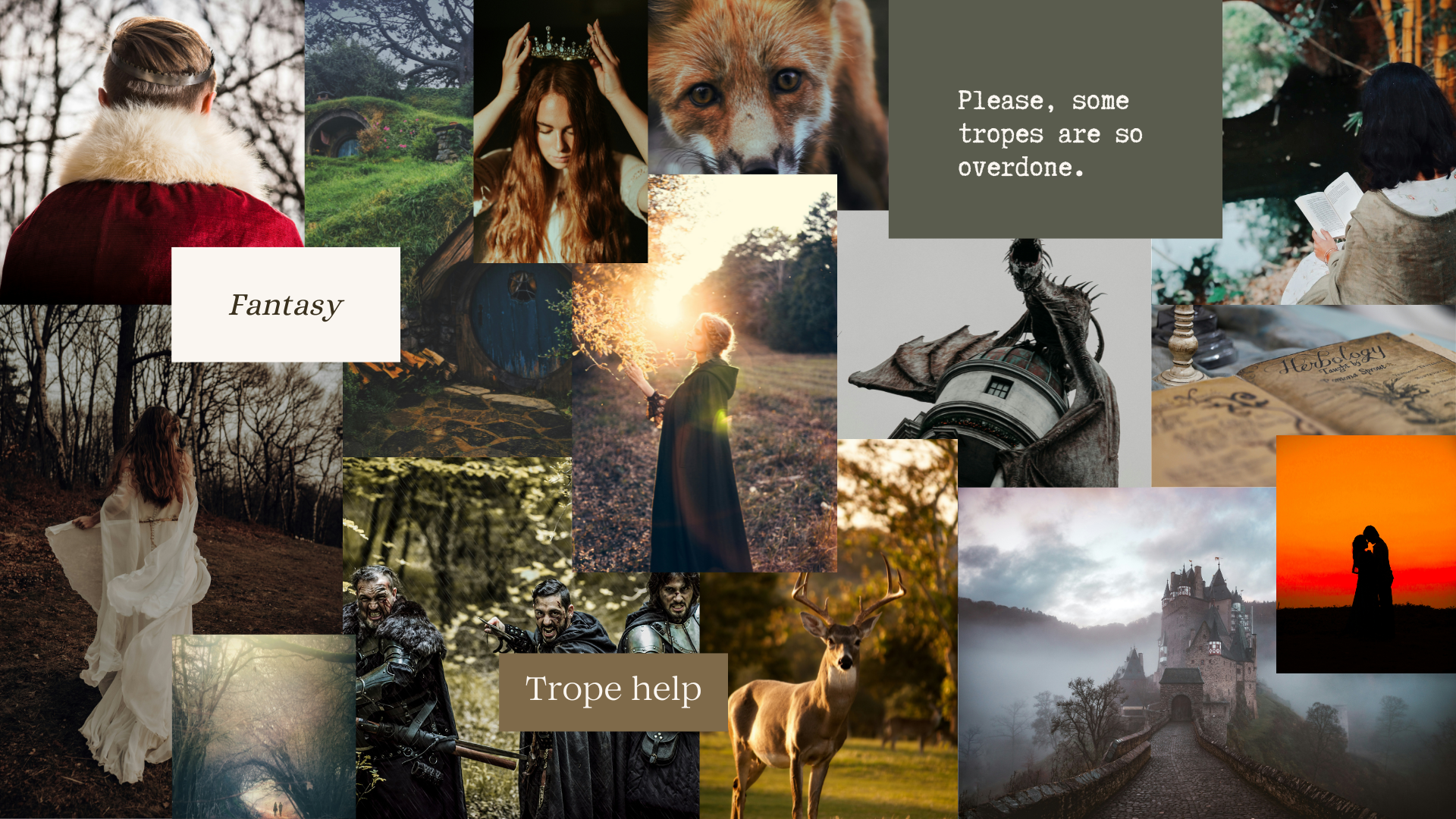
We all enjoy a good fantasy novel, whether that be a book like Harry Potter or something more intricate with extensive worldbuilding, such as the Lord of the Rings series. We see the same things repeatedly, though: the same prophecy, chosen farm boys, and ancient evils. Fantasy stories are some of the most popular book genres read today. Many new authors have also been getting the spotlight in this genre thanks to social media. But there’s one thing many have in common, and that is the overuse of tropes. Tropes aren’t a bad thing; they actually are narrative tools, but repetition without reflection dulls the magic.
What a Trope Is (and Isn’t)
What is a trope, you ask? Well, fun fact, there are two different definitions of it. First is a catchall for figures of speech that say one thing but mean another in a fun, artistic way. The other meaning of trope is a storytelling convention, device, or motif; specific tropes might be a characteristic of a particular genre of storytelling. (College of Liberal Arts). Some think that a trope is an archetype. An archetype is the original pattern or model of which things are either copies or representations, according to Merriam-Webster Dictionary. Another thing people think is a trope is the lazy execution of authors. In other words, the authors rely on cliches and lose their magic touch. This creates a story that lost all the potential quality it could have had. Tropes, on the other hand, help function as literary shorthand, especially for fiction writing.
The Hall of the Overused
Let’s take a look at the various overused tropes and why they are.
The Chosen One
The Chosen One is one of the most basic and overused tropes in fantasy. We have all read books where the chosen one is the main character, and that’s their whole shtick. Here’s the thing, though, we take this character and go, “Guess what! You’ve been chosen to defeat this great evil. Good luck.” Then the character goes on some harrowing journey to defeat said evil, and they are the only one who can do this. Of course, they have help, but in the end, they can be the only ones to defeat the great evil. A very cookie-cutter way of writing this character. There is so much more potential we could have for this trope. What if instead they were told they were the chosen one, the time, and then in the end find out they aren’t the chosen one, but some side character is the true chosen one? Or what if we are led to believe they are the chosen one, but could be the great evil we had been hearing about? The Chosen One is always the same destiny, same prophecy doing all the heavy lifting, and readers crave the earned heroism this gets them. My advice with this trope? Find some way to spice it up.
Medieval Europe, Again
Now, don’t get me wrong, I enjoy a good medieval Europe setting. If only because, as a history nerd, I want to steal one of their castles for myself and pretend to be a queen. But I digress. There are so many other medieval parts of the world that have potential that people forget about. By reusing medieval Europe again and again, we are stuck in the 1200’s-1500’s, no change, never leaving. But also by doing this, we are ignoring the other histories and mythic traditions out there that could help build the plotlines, the story, the entire worldbuilding scenario. My advice? Start looking at other cultures and incorporate them into the story, use them to help create a fantasy realm that anyone would want to be a part of. There is so much potential just going to waste.
The Dark Lord with a Capital D
We’ve all read books like Harry Potter or The Lord of the Rings. But they all had something in common. There was the big bad dark lord, the one the chosen one had to defeat. Usually, they are pure evil with the most wicked intentions, like Voldemort. He wanted to get rid of Muggles and Muggleborns, so only purebloods survived. Talk about some weird Nazi mentality! Most Dark Lords have vague motivations; we don’t really get why they decide to do this; they just do it on a whim. The moral simplicity of these vague motivations and the overuse of the Dark Lord flattens the conflict. There could be so many other layers to the Dark Lord if it’s done right, but because they have vague motivations, we don’t really get those layers, and the chosen one who has to defeat them doesn’t either. Now it’d be better if we say the Dark Lord was a friend of the Chosen One, who we watched slowly get corrupted over time, or change. That would help build the conflict up because we’d be personally invested in how the story goes.
Magic as a Convenient Battery.
Now I love stories stuffed full of magic just as much as the next person. What I love even more, though, is when the magic has a reason for existing and not just as a cure-all for plot’s sake. Many magic systems lack the cost of magic use, missing rules or none at all, and what are the consequences? Magic systems need more; they need to be so woven into your world and story that you can be asked any question and automatically know the answer, like it’s just a part of you.
The Farm Boy to King Pipeline
Again, this is another very overused trope. We all read stories where the person is just a poor person, then suddenly they are some great ruler everyone has been waiting for. But let’s be realistic here, even King Arthur had to earn his right to the throne by honing his skills and securing political allies. What we see most often in books is that due to their bloodline, they become a great figure. They didn’t achieve it by skill. They didn’t earn it by actual growth. Most certainly, it wasn’t earned through political complexity like real royalty is.
Elves are Graceful, Dwarves are Grumpy
I think one of the biggest contributors to this stereotype trend is the works of Tolkien. We have reduced the need for cultures of different fantasy races and have just defined them based on their personality presets. If we actually look at the various myths from around the world, there is so much more to different mythic creatures. A podcast that does a good job of going into detail about different mythic creatures is Myth and Legends by Jason Weiser. There’s so much history and culture-rich knowledge that could be used. My advice, don’t just categorize by a personality, make them known by a rich culture.
Why These Tropes Refuse to Die
Now I know many are asking, “Well, why do these tropes refuse to die?” I think I can answer that for you. Many see these tropes as a comfort, and they’re familiar. Readers enjoy the patterns of things they see over and over again. Tropes also lower cognitive load and make you feel like you’re coming home. In other words, you don’t have to think about it so hard and just accept it. Another reason why they refuse to die is due to market forces and imitation. There have been many successful books spawning with these tropes. There’s also the publishing of rewarding the recognizable, i.e., the same tropes. A third reason is mythic inheritance. Many tropes descend from ancient myths and fairytales. Meaning they’re stubborn because they’re old. Just look at Disney and the Grimm Fairytales! The last reason is adaptations feeding adaptations. There are so many things that impact this last point. Games inspire novels. The Witcher is a good example as it is a game, book, and TV show. Novels inspire films, again, Harry Potter and The Lord of the Rings, being fine examples. Films then inspire games. How many games have we seen come about because of films, all the open world RPG’s being good examples. This is because they are looping the same DNA.
When Tropes Still Work
I’m not saying these tropes are bad, far from it, actually. But there is a time and place to use these tropes without sounding repetitive. One just needs to be self-aware. By creating a subversion of the trope, morally gray chosen one, anyone?, or deepening their reason for this trope are good things to help change the cliché and revive the trope. Some other examples of how these tropes can be used: the chosen one refuses the role, a Dark Lord who has understandable goals, and a familiar setting examined through an unfamiliar lens.
The Cost of Unexamined Tropes
When stories rely too heavily on the defaults of these tropes, we begin to lose the creative freedom we originally had. The narrative becomes predictable and boring. There are missed opportunities for representation and imagination. The readers are then becoming so genre savvy that they start seeing the machinery of the same tropes instead of the magic we writers want to invoke in them.
Moving Beyond the Spellbook
There are ways to get around the overuse of tropes. Start asking yourself as a writer when faced with these tropes. “Why this setting?” “Why this hero?” “Why is my Dark Lord a Dark Lord?” Borrow structure without copying aesthetics. Look at other resources: anthropology, history, non-Western myth, maybe some science fiction influences.
Keep the Magic, Change the Incantation
As I said, we all enjoy a good fantasy novel and will continue to enjoy a good fantasy novel when done right. Tropes aren’t our enemies; they’re fossils. Studying them tells us where fantasy has been- and where it could evolve next. Fantasy is a vastly expanding genre and a much-beloved genre; there will always be something new to surprise us. So, what tropes do you like best?
Leave a Reply